Conteplating on developing a Mobile App part I
WARNING: contains nerdy content
One of my main activities since I retired is working with the Collin County Master Gardeners (CCMG). They are hosting the 2016 Texas Master Gardener State Conference and I sort of volunteered to develop a mobile app for the conference. My background is software and systems engineering. However my software engineering is somewhat dated. “I can program Fortran in any language”. Needless to say I’ve no experience developing mobile apps.
My son develops mobile apps so I turned to him for advice. He recommended I start with the Stanford “Developing IOS 7 Apps for the iPhone and iPad.” The Stanford course is a free online course available via iTunes University.
I eagerly subscribed to the course, started watching lectures, and working through homework assignments. The course consists of 18 lectures and 6 homework assignments. I’ve now watched 11 lectures and am developing the lecture 11 demonstration. I’m not quite as bright eyed and bushy tailed now as when I started but I’m still slogging through the course. As soon as I complete the Stanford Course I plan to start developing the CCMG State Conference app. I’ll probably post an update once I’ve completed the App.
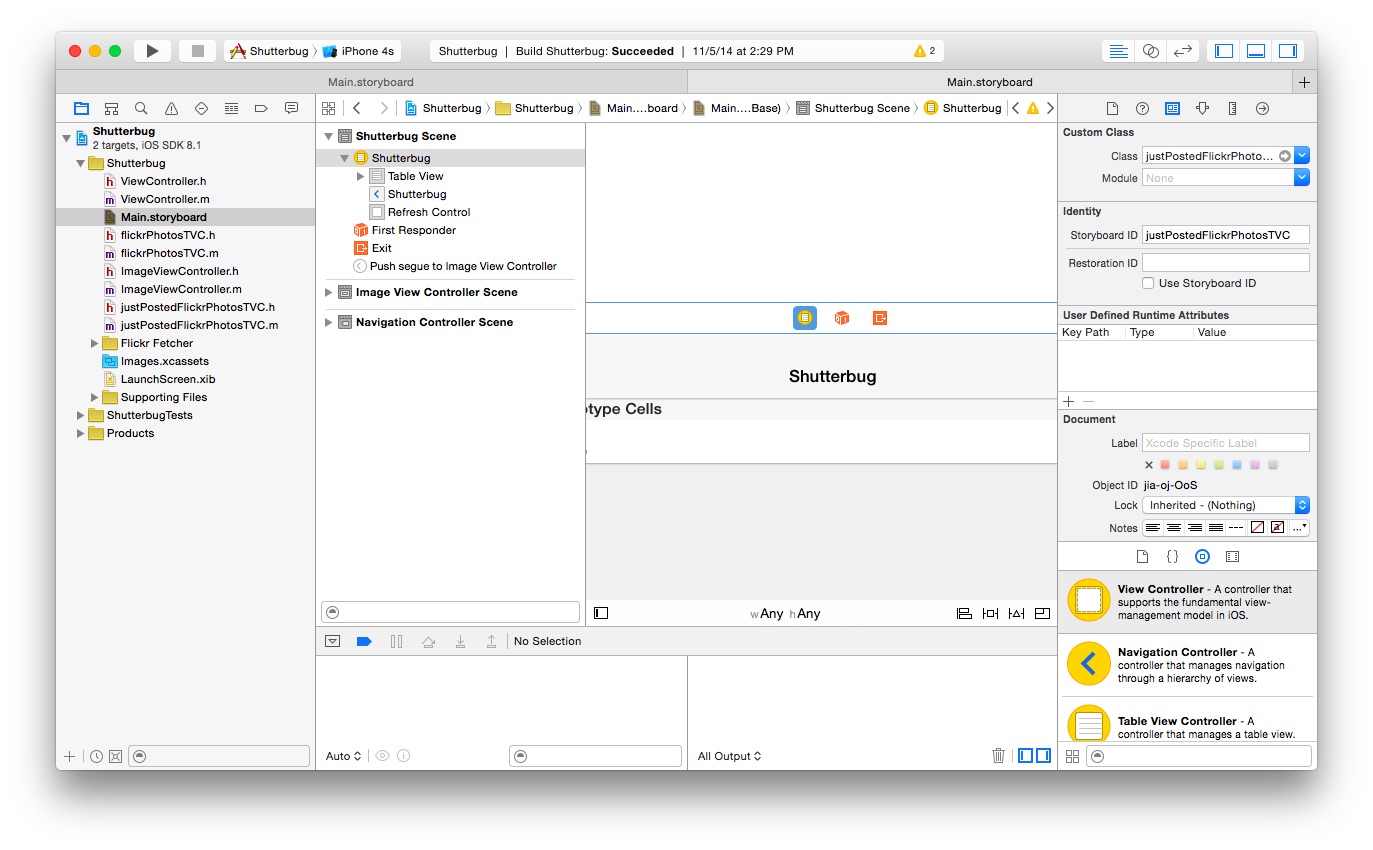
xCode Environment
My observations to date:
- The Stanford course is very professional and I’d recommend it for anyone considering developing mobile apps.
- A Mac and the Apple’s development environment Xcode are required to develop iPhone and iPad Apps.
- Since the course was recorded Apple has released a new IOS version and a new programming language (Swift) both have which resulted in massive Xcode modifications making matching the lectures to Xcode challenging.
- An Apple Developers’s license ($99/year) is required before you can test Apps on your iPhone or iPad.
- The Developer’s License is also required to submit Apps to the Apple App store.
- Once submitted, Before the Apple publishes the App in the App Store they test and approve it. The approval process is mysterious to me. I imagine I’ll be enlightened once I submit the App.
- The IOS Simulator can be used to test Apps on your Mac without the IOS Simulator, however testing many of the gestures is awkward and in some cases impossible.
- Objective-C, Apple’s programming language,is really wordy and really weird.
- The user interface constitutes the majority of the development effort, at least so far.
- You don’t just build the App once and offer it on the Apple App Store and the Android Market. You build each using unique tools (Apple’s Xcode and Android SDK).